![lodo ncr [recovered] png (1)](https://ncrfarms.in/wp-content/uploads/2025/12/cropped-lodo-NCR-Recovered-png-1-2-192x64.png)
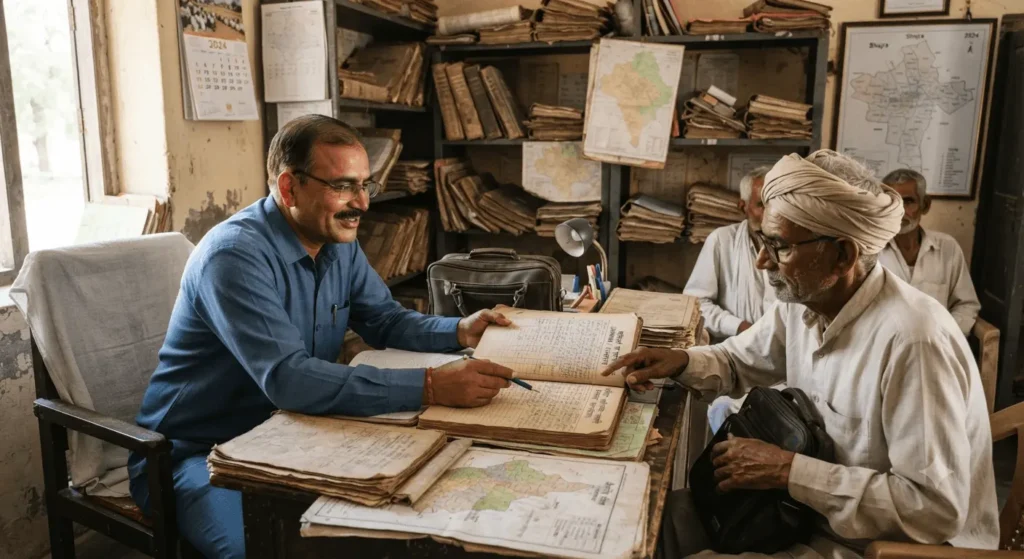
Patwari records play a vital role in maintaining land ownership details, agricultural information, and revenue records across rural India. Whether you are planning to buy agricultural land, verify ownership, apply for a loan, or complete a land mutation, understanding Patwari records is essential. These records help ensure transparency and reduce the risk of disputes or fraud during property transactions.
In this guide, we’ll explain what Patwari records are, why they matter, how to access them, and the key documents maintained by a Patwari.
What Are Patwari Records?
Patwari records are official land revenue records maintained by a Patwari, a government-appointed revenue officer responsible for managing land-related information within a specific village or revenue circle.
These records include information about:
- Land ownership
- Khasra numbers
- Crop details
- Land area
- Mutation entries
- Revenue payments
- Agricultural classification
Patwari records form the foundation of rural land administration and are regularly updated whenever ownership or land use changes.
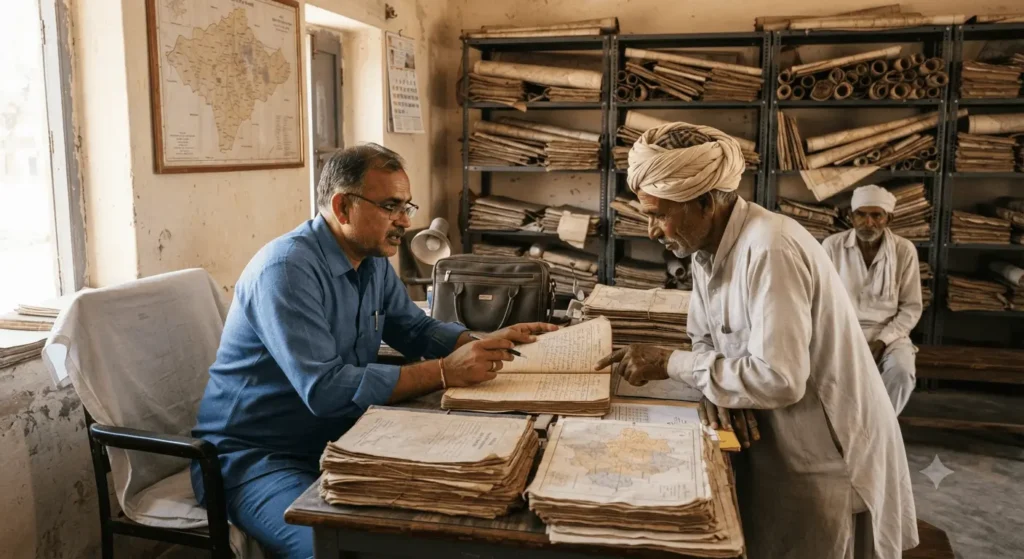
Who Is a Patwari?
A Patwari is the local revenue official responsible for maintaining village land records. They act as the first point of contact for landowners, farmers, buyers, and government authorities regarding land documentation.
Their responsibilities include:
- Maintaining land ownership records
- Updating mutation entries
- Recording crop cultivation
- Verifying land boundaries
- Collecting land revenue
- Assisting during property registration
- Reporting changes in land ownership
Why Are Patwari Records Important?
Patwari records provide legal and administrative evidence of land ownership and usage.
They help in:
- Verifying genuine ownership
- Preventing land fraud
- Resolving ownership disputes
- Applying for agricultural loans
- Processing land mutations
- Registering property sales
- Government compensation claims
- Crop insurance verification
Without accurate Patwari records, property transactions may become legally complicated.
Major Documents Maintained by a Patwari
Several important land documents are maintained at the Patwari office.
1. Khasra Record
The Khasra contains detailed information about individual land parcels.
It includes:
- Khasra Number
- Land Area
- Owner Name
- Crop Details
- Land Classification
- Irrigation Information
2. Khata or Khatauni
This document records ownership details of multiple land parcels owned by a single individual or family.
It contains:
- Owner Name
- Father’s Name
- Total Land Holding
- Ownership Share
3. Jamabandi
Jamabandi is the official Record of Rights that contains:
- Ownership details
- Tenant information
- Revenue details
- Cultivation records
Many states update Jamabandi every four or five years.
4. Mutation Register
Whenever land ownership changes due to:
- Sale
- Gift
- Inheritance
- Partition
The Patwari records the change through mutation entries.
5. Crop Inspection Register
Patwaris regularly inspect cultivated land and record:
- Type of crop
- Cultivated area
- Irrigation source
- Seasonal crop information
These records are important for agricultural planning and insurance.
Information Available in Patwari Records
A typical Patwari record contains:
- Landowner’s Name
- Father’s Name
- Village Name
- Khasra Number
- Khata Number
- Total Area
- Land Category
- Soil Type
- Crop Details
- Mutation Status
- Revenue Payment Details
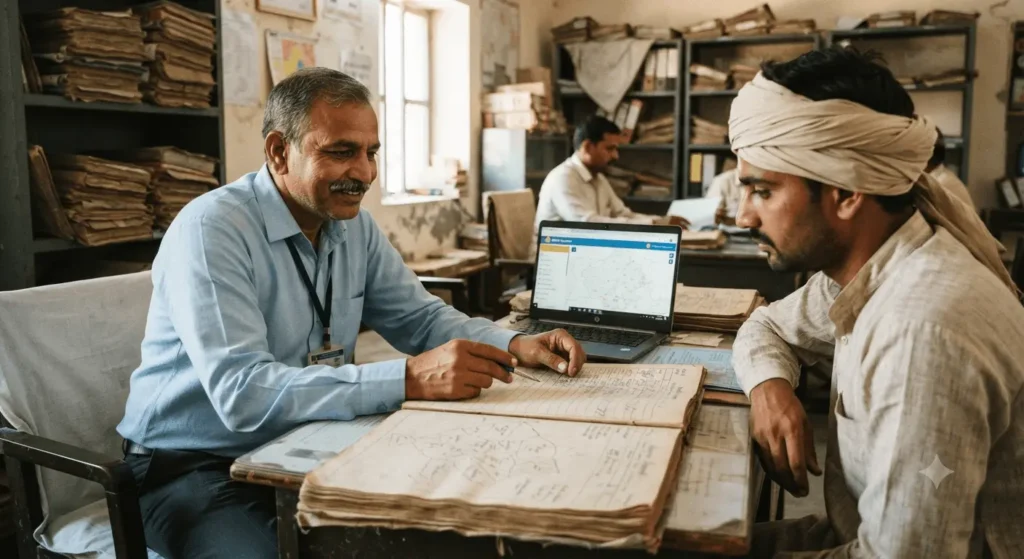
How Patwari Records Help During Property Purchase
Before buying agricultural land, buyers should carefully verify Patwari records.
Check for:
Ownership Verification
Ensure the seller is the legal owner.
Mutation Status
Confirm ownership has been properly transferred.
Land Classification
Verify whether the land is agricultural, residential, or commercial.
Encumbrances
Check for loans, disputes, or government acquisition notices.
Land Area
Match the actual site area with official records.
How to Access Patwari Records
There are multiple ways to obtain land records.
Visit the Patwari Office
The traditional method involves visiting the village revenue office.
You may need:
- Khasra Number
- Khata Number
- Owner Name
- Village Name
Online Land Record Portals
Many Indian states now provide digital access to land records through official revenue department portals.
Users can search records using:
- Owner Name
- Khasra Number
- Khata Number
- Village Details
This has made verification faster and more transparent.
Common Reasons for Updating Patwari Records
Records are updated whenever:
- Property is sold
- Ownership changes through inheritance
- Family partition occurs
- Court orders ownership changes
- Government land acquisition happens
- Agricultural land conversion is approved
Timely updates help avoid future legal disputes.
Common Mistakes Buyers Should Avoid
Many buyers rely only on the sale deed.
Instead, always verify:
- Latest mutation records
- Current Jamabandi
- Updated Khasra entries
- Boundary measurements
- Seller’s identity
- Revenue dues
Skipping these checks can lead to ownership disputes later.
Patwari Records and Land Fraud
Patwari records play an important role in identifying fraudulent transactions.
They help detect:
- Fake ownership claims
- Duplicate land sales
- Forged mutation entries
- Encroached government land
- Boundary manipulation
Cross-checking official records before purchase significantly reduces risk.
Digital Transformation of Patwari Records
Most state governments are digitizing land records to improve transparency and accessibility.
Benefits include:
- Faster verification
- Reduced paperwork
- Online mutation tracking
- Improved transparency
- Easier access for buyers
- Better protection against record tampering
Digital records have made land transactions more efficient while reducing opportunities for fraud.
Tips for Safe Land Verification
Before purchasing any agricultural land:
- Verify the latest Patwari records.
- Match ownership details with the sale deed.
- Check the mutation status.
- Confirm the Khasra number and land area.
- Inspect the property physically.
- Review revenue payment history.
- Consult a qualified legal expert if required.
These precautions can help you make a secure and informed investment.
Conclusion
Patwari records are one of the most important components of India’s land administration system. They provide accurate information about ownership, land classification, cultivation, and revenue history, making them indispensable for buyers, sellers, farmers, and investors.
Whether you are purchasing agricultural land, verifying ownership, or resolving a property dispute, reviewing updated Patwari records should always be part of your due diligence. Accurate land records not only protect your investment but also ensure smooth and legally compliant property transactions.
Frequently Asked Questions (FAQs)
1. What are Patwari records?
Patwari records are official land revenue documents maintained by a village revenue officer that contain ownership, land area, crop, and mutation details.
2. Who maintains Patwari records?
A government-appointed Patwari maintains and updates land records for a designated village or revenue circle.
3. Why are Patwari records important before buying land?
They help verify ownership, mutation status, land classification, and identify any disputes or legal issues.
4. Can I check Patwari records online?
Yes. Many Indian states provide online access to land records through their official revenue department portals.
5. What documents are included in Patwari records?
Common documents include Khasra, Khata/Khatauni, Jamabandi, Mutation Register, and Crop Inspection Register.
6. What is the difference between Patwari records and a sale deed?
A sale deed records the transfer of ownership, while Patwari records maintain ongoing information about ownership, land details, and revenue records.
7. How often are Patwari records updated?
They are updated whenever ownership changes, mutation is approved, crops are inspected, or revenue records are revised.
8. Can incorrect Patwari records be corrected?
Yes. Landowners can apply to the local revenue office with supporting documents to request corrections.
9. Are Patwari records legally valid?
Yes. They are official government records and serve as important evidence in land administration and verification.
10. Do Patwari records guarantee ownership?
Patwari records are strong supporting documents, but ownership should also be verified through the registered sale deed, mutation records, and other relevant legal documents.