![lodo ncr [recovered] png (1)](https://ncrfarms.in/wp-content/uploads/2025/12/cropped-lodo-NCR-Recovered-png-1-2-192x64.png)
When buying agricultural land, farmland, or residential plots in India, one of the most important documents you should verify is the Jamabandi. Whether you’re a first-time buyer or an experienced investor, understanding this land record can protect you from legal disputes and ownership issues.
In this guide, we’ll explain Jamabandi, its importance, how to check it online, and why it plays a crucial role in land transactions.
What Is Jamabandi?
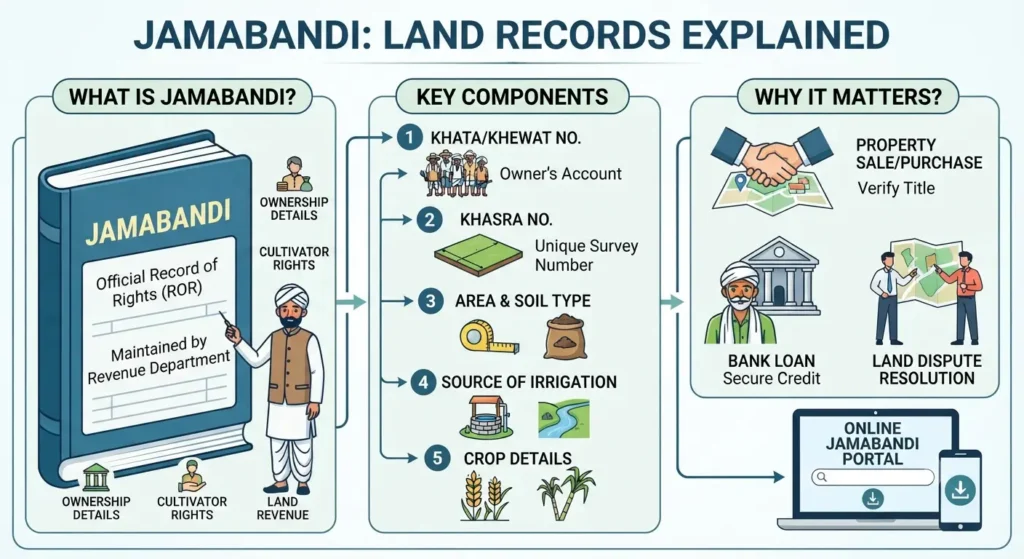
Jamabandi is an official land record maintained by the Revenue Department of the state government. It contains detailed information about land ownership, cultivation, land area, revenue, and other legal details related to a particular property.
The record is periodically updated by the local revenue authorities to reflect changes in ownership, inheritance, sale, or partition.
Simply put, Jamabandi acts as the official ownership register for agricultural and rural land.
Why Is Jamabandi Important?
A Jamabandi record provides transparency in land ownership and helps buyers verify the legal status of a property before making an investment.
Key Benefits
- Confirms the legal owner of the land
- Shows the total land area
- Displays survey or khasra numbers
- Identifies co-owners, if any
- Reveals cultivation details
- Helps verify mutation updates
- Reduces the risk of fraudulent transactions
- Assists banks during loan processing
Information Available In A Jamabandi Record
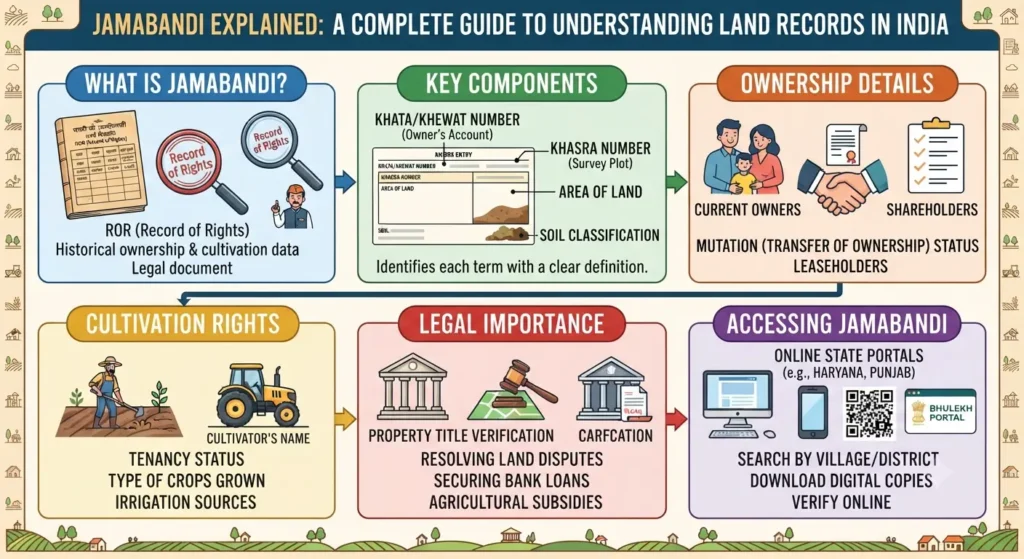
A standard Jamabandi document generally includes:
- Owner’s name
- Father’s or predecessor’s name
- Khasra Number
- Khata Number
- Land area
- Village name
- Tehsil and district
- Nature of land
- Revenue details
- Share of ownership
- Details of cultivator (if different from owner)
These records help buyers understand the complete history and ownership of the land.
What Is Khasra Number?
The Khasra Number is a unique identification number assigned to each parcel of land in a village.
Think of it as the plot number for agricultural land.
Every Jamabandi record is linked to one or more Khasra numbers, making it easier to identify the exact location of a property.
Difference Between Jamabandi And Mutation
Many buyers confuse Jamabandi with Mutation.
| Jamabandi | Mutation |
|---|---|
| Permanent land ownership record | Process of updating ownership after sale or inheritance |
| Maintained by Revenue Department | Initiated after transfer of property |
| Shows current ownership details | Updates ownership changes |
| Used for land verification | Used after property transactions |
Both documents are important but serve different purposes.
Who Needs Jamabandi?
Jamabandi is useful for:
- Land buyers
- Farmers
- Real estate investors
- Property developers
- Banks
- Financial institutions
- Lawyers
- Government authorities
Anyone involved in a land transaction should review the Jamabandi record.
How To Check Jamabandi Online
Many Indian states now provide online access to Jamabandi records through their official revenue portals.
Generally, you can search using:
- District
- Tehsil
- Village
- Khata Number
- Khasra Number
- Owner’s Name
The online record allows buyers to verify ownership before proceeding with the purchase.
Why Should Buyers Verify Jamabandi Before Buying Land?
Skipping this step can lead to costly legal problems.
Verifying Jamabandi helps you:
- Confirm genuine ownership
- Avoid disputed land
- Identify multiple ownership claims
- Verify land classification
- Check whether mutation has been updated
- Prevent fraudulent property sales
It is one of the most important due diligence steps in any land investment.
Jamabandi and Agricultural Land Investment
If you’re planning to invest in agricultural land or farmhouse plots, Jamabandi becomes even more important.
Before making a purchase, verify:
- Ownership details
- Land boundaries
- Revenue records
- Existing claims
- Mutation status
- Encumbrances, if applicable
This helps ensure your investment is legally secure.
Common Mistakes Buyers Make
Avoid these common errors:
- Buying land without checking Jamabandi
- Ignoring mutation records
- Trusting photocopies instead of official records
- Not matching Khasra numbers with site documents
- Overlooking co-ownership details
- Failing to verify the latest updates
Conducting proper verification can save significant time and money.
Documents to Verify Along with Jamabandi
For a safe property purchase, also review:
- Sale Deed
- Mutation Record
- Khasra Girdawari
- Registry Documents
- Encumbrance Certificate (where applicable)
- Approved layout plan (if relevant)
- Identity documents of the seller
Cross-checking these records helps reduce legal risks.
Final Thoughts
Understanding Jamabandi explained is essential for anyone planning to buy agricultural land, farmhouse plots, or rural property in India. It serves as a reliable record of ownership and provides valuable insights into the legal status of a property.
Before investing, always verify the latest Jamabandi records, confirm ownership details, and ensure all supporting documents are in order. Taking these precautions can help you make a secure and informed investment decision while avoiding future disputes.
Frequently Asked Questions (FAQs)
1. What is Jamabandi?
Jamabandi is an official land record maintained by the Revenue Department that contains details about land ownership, area, cultivation, and revenue.
2. Is Jamabandi proof of ownership?
Jamabandi is an important revenue record indicating ownership details, but it should be verified along with other legal documents such as the registered sale deed.
3. Can I check Jamabandi online?
Yes. Many Indian states provide online access to Jamabandi records through their official land records portals.
4. What Is The difference between Jamabandi and Khasra?
Jamabandi is the complete land ownership record, while the Khasra Number uniquely identifies a specific parcel of land.
5. Why is Jamabandi important before buying land?
It helps verify ownership, land details, mutation status, and reduces the risk of purchasing disputed or fraudulent property.
6. How often is Jamabandi updated?
It is updated by the Revenue Department whenever there are changes in ownership, inheritance, partition, or other relevant land transactions.
7. Does every state in India maintain Jamabandi records?
Different states use different land record systems, but most maintain similar revenue records that serve the same purpose.
8. Can banks verify Jamabandi before approving a loan?
Yes. Banks often review land records, including Jamabandi, during the loan approval process for agricultural and rural properties.
9. Is Jamabandi required for farmland investment?
Yes. It is one of the most important documents for verifying ownership and legal status before investing in farmland.
10. Should I consult a legal expert before purchasing land?
Yes. Along with verifying Jamabandi, consulting a qualified property lawyer can help ensure a legally secure transaction



![lodo ncr [recovered] png (1)](https://ncrfarms.in/wp-content/uploads/2025/12/cropped-lodo-NCR-Recovered-png-1-2.png "lodo ncr [recovered] png (1)")