![lodo ncr [recovered] png (1)](https://ncrfarms.in/wp-content/uploads/2025/12/cropped-lodo-NCR-Recovered-png-1-2-192x64.png)
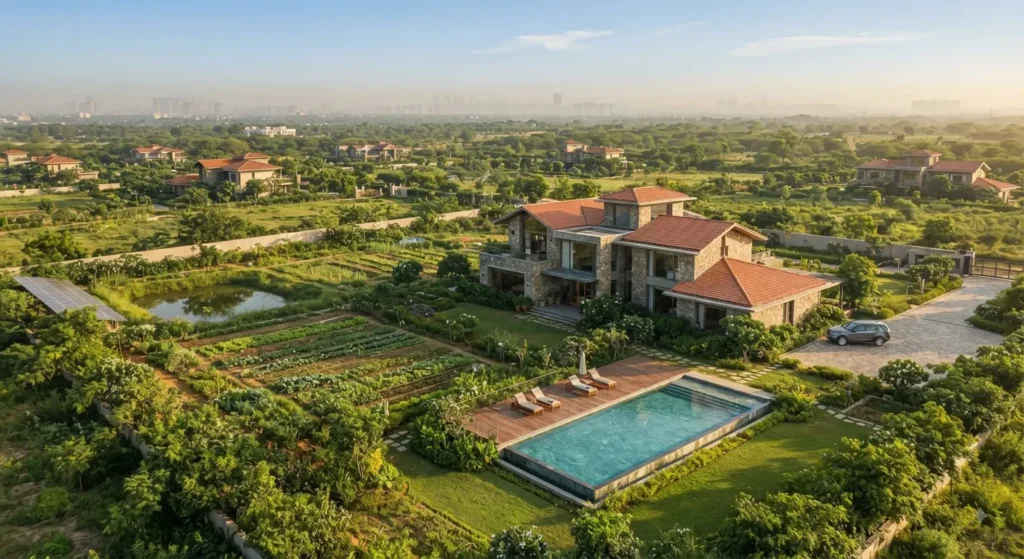
Life in a busy city can be exciting, but it can also become exhausting. Traffic, noise, crowded streets, long working hours, and constant digital distractions often leave people searching for a peaceful place to slow down. This is where the idea of a sustainable weekend farmhouse becomes appealing.
A thoughtfully planned farmhouse can offer a private escape from urban life while providing a closer connection with nature. The best part is that creating such a retreat does not have to involve unnecessary complexity or excessive spending. With the right location, practical design, sustainable features, and a realistic maintenance plan, a weekend farmhouse can become an enjoyable long-term lifestyle investment.
Start With a Clear Purpose
Before purchasing land or planning construction, decide exactly how you want to use the farmhouse.
Will it be a quiet retreat for your family? A place for weekend gatherings? A space for gardening and outdoor activities? Or perhaps a second home where you can occasionally work remotely?
Your answer will influence almost every decision, including the size of the property, number of rooms, landscaping, parking, outdoor spaces, and utility requirements.
A simple farmhouse designed around your actual lifestyle is often more useful than an oversized property filled with features that are rarely used.
Choose a Convenient Location
Location is one of the most important factors when planning a weekend farmhouse.
A property that looks perfect on paper may become inconvenient if reaching it requires a long and difficult journey. Since weekend properties are generally used for short stays, good road connectivity can make a major difference.
For buyers around Delhi-NCR, emerging areas connected to major highways and expressways can be worth exploring. Locations with improving infrastructure may provide a combination of accessibility, open surroundings, and potential long-term development.
However, do not judge a location only by its advertised distance from a major city. Check the actual route, approach road, traffic conditions, nearby facilities, and accessibility during different seasons.
Verify The Land Before Buying
A beautiful location is not enough. The land itself must be carefully verified.
Before purchasing, check ownership and title documents, revenue records, mutation details, land classification, encumbrances, road access, and applicable land-use regulations.
If you plan to construct a farmhouse, make sure the proposed use and construction comply with relevant local rules. Agricultural land, residential land, and other categories can have different regulations.
It is advisable to seek independent legal and property advice before completing a land transaction.
Design For Comfort Rather Than Excess
A sustainable farmhouse should be comfortable without becoming unnecessarily complicated.
Consider how many people will regularly use the property and design accordingly. A practical living room, bedrooms, kitchen, bathrooms, storage areas, and an outdoor seating zone may be sufficient for many weekend families.
Large windows can provide natural light and ventilation. Verandas and shaded outdoor areas can make the transition between indoor and outdoor living more comfortable.
Instead of focusing only on the size of the building, think about how the spaces will be used.
Make Natural Light Part Of The Design
Good design can reduce dependence on artificial lighting during the day.
Windows, skylights, open spaces, and appropriate building orientation can help bring natural light indoors. External shading, trees, pergolas, and covered verandas can also help manage heat.
Natural ventilation is equally important. Properly positioned openings can encourage cross-ventilation and improve indoor comfort.
These features may seem simple, but they can contribute significantly to the farmhouse experience.
Explore Solar Energy
Solar power can be an excellent option for a weekend property.
A solar system can potentially support lighting, appliances, water pumps, and other essential requirements. Depending on the property’s location and electricity connection, homeowners can explore different solar configurations.
The system should be sized according to actual energy consumption. Installing a very large system without understanding your requirements may increase costs unnecessarily.
Energy-efficient appliances and LED lighting can further reduce electricity consumption.
Plan Water Management Early
Water is another essential consideration for farmhouse planning.
Rainwater harvesting can help capture rainwater and manage runoff. Depending on local conditions and regulations, collected rainwater may be used for gardening or other appropriate purposes after suitable treatment.
Efficient irrigation can also reduce water consumption. Drip irrigation and other controlled watering methods can be useful for gardens and plantations.
Before developing a water system, understand the availability of groundwater, local regulations, and seasonal water requirements.
Create a Low-Maintenance Landscape
A farmhouse should feel relaxing, not like a full-time gardening project.
Choose plants that are suitable for the local climate and do not require excessive watering or daily maintenance. Native and drought-tolerant species can be particularly useful.
You can combine:
- Fruit trees
- Seasonal vegetables
- Native plants
- Flowering plants
- Shaded seating
- Walking paths
- Small lawn areas
A balanced landscape can create a natural atmosphere while keeping maintenance manageable.
Add a Kitchen Garden
One of the most rewarding farmhouse experiences is growing your own food.
You do not need a large agricultural area to get started. A small kitchen garden can provide herbs, vegetables, and seasonal produce.
Growing food can also become a fun family activity. Children can learn about plants, soil, seasons, and sustainable living while spending less time on digital devices.
As you gain experience, the garden can gradually expand.
Think About Waste Management
Sustainability does not stop with solar panels and rainwater harvesting.
Waste management should also be part of the farmhouse plan. Separate organic waste, recyclable materials, and other waste wherever practical.
Garden and kitchen waste can potentially be converted into compost using a suitable composting system. This compost can then support the garden.
Reducing disposable plastic products and choosing reusable items can further simplify sustainable living.
Keep Maintenance Simple
A weekend farmhouse may remain empty for several days or weeks. This makes low maintenance particularly important.
Avoid designing a property that requires constant supervision. Instead, select durable materials, simple landscaping, efficient irrigation, and reliable utilities.
You can also consider remote monitoring systems for security, water pumps, electricity, and other important functions.
The goal is simple: when you arrive on the weekend, you should be able to relax rather than spend the entire day fixing problems.
Build Outdoor Living Spaces
The outdoor area can become the heart of a farmhouse.
A shaded veranda, garden seating, outdoor dining area, reading corner, or open gathering space can encourage family members to spend more time outside.
You do not need an elaborate outdoor setup. Even a comfortable seating area surrounded by trees can create a peaceful atmosphere.
Good outdoor planning can make the property feel larger without requiring a significant increase in built-up space.
Make Security a Priority
Weekend properties require additional security because they may remain vacant for extended periods.
Depending on the location, consider secure gates, appropriate fencing, outdoor lighting, CCTV cameras, alarms, and reliable local support.
Smart locks and remote monitoring systems can also make it easier to check the property when you are away.
Security should be planned from the beginning rather than added after construction is complete.
Use Technology Where It Helps
Technology can make farmhouse ownership easier, but it should be practical.
Smart irrigation systems can help manage garden watering. Automated lighting can improve security and reduce unnecessary electricity use. Remote cameras can allow homeowners to monitor the property while travelling.
However, avoid installing complicated systems simply because they are available. Technology should make the property easier to manage, not create another technical challenge.
Create a Realistic Budget
A farmhouse budget should include more than the construction cost.
Consider the cost of land, registration, professional services, construction, landscaping, water infrastructure, electricity, solar systems, fencing, furniture, security, and ongoing maintenance.
It is also wise to maintain a contingency fund for unexpected expenses.
A modest property that remains financially comfortable is often better than an expensive farmhouse that creates long-term financial pressure.
Consider A Phased Development Approach
You do not have to complete everything at once.
A phased approach can make the project more manageable. Start with the essential house, utilities, security, and basic landscaping. Once you understand how the property works during different seasons, you can add more features.
Future additions might include a larger kitchen garden, additional outdoor seating, upgraded solar capacity, recreational areas, or other lifestyle features, subject to applicable regulations.
This approach also prevents unnecessary spending on features you may eventually discover you do not need.
Make The Farmhouse A Digital Detox Zone
One of the greatest benefits of a weekend farmhouse is the opportunity to disconnect.
Consider creating spaces where phones and laptops are not the centre of attention. A garden, reading corner, outdoor dining space, walking path, or simple sitting area can encourage more meaningful conversations.
A farmhouse can become a place where families spend time cooking together, gardening, playing outdoor games, watching sunsets, or simply enjoying silence.
Sustainability And Comfort Can Coexist
Sustainable living does not mean giving up comfort.
Modern farmhouse design can combine energy efficiency, natural materials, smart technology, comfortable interiors, and attractive landscaping.
The objective is to use resources intelligently rather than eliminate modern conveniences.
For example, solar energy can support electricity needs, rainwater harvesting can improve water management, and energy-efficient appliances can reduce consumption without compromising comfort.
Why A Weekend Farmhouse Can Be More Than A Holiday Property
A well-planned farmhouse can become a lifestyle asset.
Instead of booking short vacations whenever you need a break, you can have a familiar private space where family and friends can gather. Over time, the property may become associated with celebrations, family traditions, gardening activities, and peaceful weekends.
For some buyers, the appeal can also extend beyond lifestyle. A strategically selected property in a developing region may have long-term real estate potential, although appreciation is never guaranteed.
Final Thoughts
Moving from city chaos to a private sanctuary does not require an overly complicated farmhouse project. The key is thoughtful planning.
Start with the right location. Verify the land carefully. Design a practical home that uses natural light and ventilation. Explore solar power and rainwater harvesting. Choose low-maintenance landscaping. Plan security and waste management from the beginning.
Most importantly, design the property around your real lifestyle.
A sustainable weekend farmhouse should give you something that city life often takes away—time, space, privacy, and a closer connection with nature.
When planned carefully, your luxury weekend home near Delhi can become more than a second property. It can become a peaceful personal sanctuary where every weekend feels like a small escape from the city’s pace.
FAQs: From City Chaos to Private Sanctuary – Planning Your Sustainable Weekend Farmhouse
1. What is a sustainable weekend farmhouse?
A sustainable weekend farmhouse is a private countryside retreat designed to provide comfort while using resources responsibly. It may include features such as solar power, rainwater harvesting, natural ventilation, energy-efficient lighting, organic gardening, and low-maintenance landscaping.
2. Why are weekend farmhouses becoming popular?
Weekend farmhouses offer an opportunity to escape busy urban environments and spend quality time in quieter surroundings. They can provide privacy, open spaces, greenery, and a place for families to relax away from traffic, noise, and daily work pressure.
3. How should I choose a location for my weekend farmhouse?
Choose a location with convenient road connectivity, a peaceful environment, essential nearby facilities, and suitable development potential. If the farmhouse is intended for regular weekend visits, practical travel time is often more important than simply choosing the largest or most remote property.
4. What should I check before buying farmhouse land?
Before purchasing land, verify the ownership and title, revenue records, mutation status, encumbrances, land classification, road access, property boundaries, and applicable land-use regulations. Independent legal verification is recommended before completing the transaction.
5. How can I make my farmhouse more sustainable?
You can incorporate solar energy, rainwater harvesting, energy-efficient appliances, natural lighting, cross-ventilation, composting, water-efficient irrigation, and native landscaping. These features can reduce resource consumption while maintaining modern comfort.
6. Is solar power useful for a weekend farmhouse?
Yes. Solar power can potentially support lighting, appliances, water pumps, and other electrical requirements. The system should be designed according to the property’s actual energy consumption, available space, budget, and local conditions.
7. What is the benefit of rainwater harvesting at a farmhouse?
Rainwater harvesting can help collect and manage rainwater instead of allowing it to run off the property. Depending on local regulations and appropriate treatment, collected water may be used for gardening or other suitable purposes.
8. How can I reduce farmhouse maintenance?
Choose durable construction materials, low-maintenance plants, efficient irrigation systems, simple landscaping, and reliable utilities. Avoid unnecessarily complicated features that require frequent servicing when the property may remain vacant for long periods.
9. What Type of garden is suitable for a weekend farmhouse?
A low-maintenance garden with plants suited to the local climate can be a practical choice. Native plants, fruit trees, seasonal vegetables, herbs, and drought-tolerant species can create a green environment without requiring excessive daily attention.
10. Can I create a kitchen garden at my farmhouse?
Yes. Even a small kitchen garden can provide herbs, vegetables, and seasonal produce. It can also become an enjoyable family activity and help create a stronger connection with nature and sustainable living.