![lodo ncr [recovered] png (1)](https://ncrfarms.in/wp-content/uploads/2025/12/cropped-lodo-NCR-Recovered-png-1-2-192x64.png)
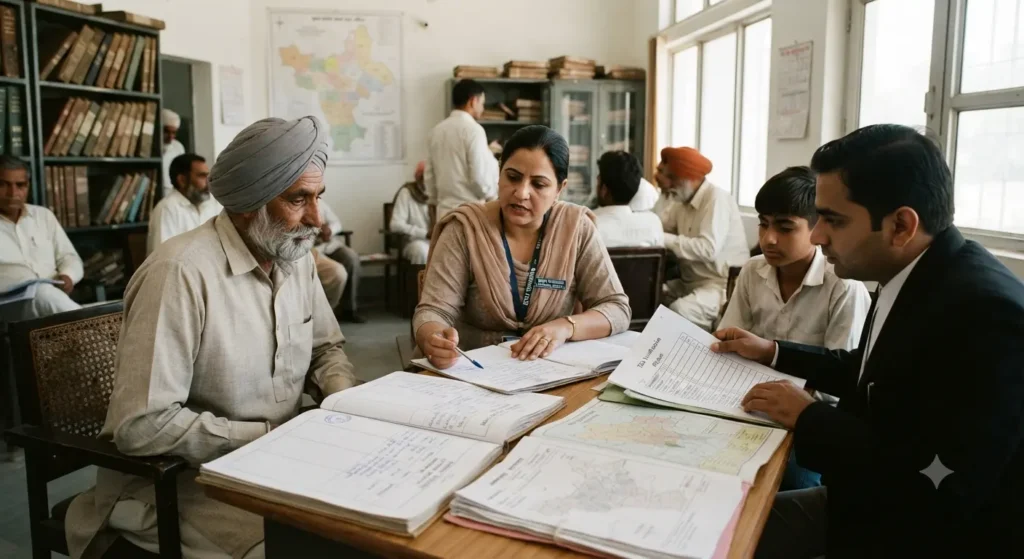
The purchase of land may be an appealing long-term investment, but there are also some legal and document verifications that must be conducted. A property can be in shiny new condition, be located in an ideal spot, be offered at an appealing price, and yet, still fail to appeal to the buyer. But, if there’s no verification, the buyer may end up with title issues, unclear titles, pending litigation, wrong land records, or resale issues.
That is why it is essential to have Jamabandi, Khasra, Mutation, Registry and title verification as a part of the land-buying procedure.
It is important to understand the documents and their inter-relationships in order to avoid unnecessary legal and financial dangers when buying a property.
What Is Jamabandi?
Jamabandi is a land revenue register which provides significant details regarding land and its registered ownership or possession. It can include information on recorded owners, the land area, recorded owner entries, and other revenue data depending on state and land-record system.
If a person is interested in buying land, they can use the Jamabandi to determine if the land owner is listed in the government’s land records.
For example, Jamabandi need not be considered as proof of clear and marketable title, for that to be the case, there must be a clear and marketable title. This is one of the verification procedures.
The buyer should check the details of the Jamabandi against other relevant documents such as previous sale deeds, mutation records and registration documents of the land.

What Is A Khasra Number?
A khasra number is a unique number which is given for a particular piece of land in the land record. It serves as a valuable tool for determining the precise location of the land in question.
The number of Khasra should be thoroughly scrutinized when buying land, and it should be compared with the seller’s documents.
The buyer should check to see if:
- The Khasra number is equal to the sale documents.
- The land area is equal to the records.
- The location and boundaries are consistent.
- The lot displayed in the field matches the parcel that is on record.
- No known problems or limitations exist on the land.
If there is any discrepancy between the information provided on Khasra and the documents, it should be clarified first before transacting the property.
What Is Mutation?
Mutation is an updating of land or revenue records because of a change in ownership or a change that has occurred under a legal instrument which would otherwise not be recorded in the land register.
For instance, if someone sells their property or inherits it, the revenue records may be amended to incorporate the buyer’s or heir’s name.
Maintaining up-to-date land records is important and makes use of mutation. Buyers will be aware, however, that mutation is not title.
A mutation entry is not a valid alternatives for the actual ownership document or create an indisputable title. The transaction should thus be viewed in conjunction with the registered deed and historical papers of the property.
What Is Property Registry?
The registry is usually a registry of a property transaction conducted by the proper government registration authority.
In case of sale, the sale deed is registered based on the procedure applicable to it. The registered document is proof of the agreement made between the parties and is also a valuable aspect of the ownership of the property.
Prior to land purchase, the existing sale deed and the previous deeds in the chain of title need to be reviewed.
A registered document should not be the only reason a buyer chooses not to perform other checks. Even if a person has already taken certain actions, inheritance laws, court conflicts, mortgages, and land use restrictions could be issues that warrant further research.
Understand the importance of title verification.Explain why title verification is important.
When a property is being sold, title is verified to ensure that the seller has the authority to convey the property and that there are no known issues that impact the property’s title.
The Title check process Can Include The following:
- Previous sale deeds
- The registered sale deed in force.
- Jamabandi records
- Khasra details
- Mutation records
- Encumbrance-related records
- If available, inheritance documents.
- Records of the court or litigation
- Revenue records
- Land-use classification
- Any required approvals and permissions are in place.
Specific documents needed may hinge on the state, property, and transaction type.
How Jamabandi, Khasra, Mutation and Registry are connected together.
These documents cannot be read individually. They offer varying pieces of information on the same property.
For instance, the Khasra number can be used to identify the parcel. The Jamabandi can contain details on revenue recording of the land and the recorded parties. Mutation is the changes made in the concerned revenue records. Registered deed record the dealings of parties.
Title verification compiles these records to analyze consistency of the ownership history and transaction papers.
Any differences in the name of the seller in one document to another, in land area, in Khasra number, boundaries, or ownership history should be investigated prior to making a large payment.
Mistakes That Frequent Land Buyers Make
A frequent error is that the agent or their buyer’s representative will only take the sellers’ information at face value.
The other is that the title of a registered property is automatically free of any encumbrances. Registration is essential but it is not a substitute for due diligence.
There Are Also some Other Things That Buyers Might Miss Out On:
- Pending disputes
- Inheritance claims
- Incorrect land measurements
- Multiple ownership claims
- Previous agreements
- Mortgages or encumbrances
- Regulations on land use.
- Physical possession vs. official records
These problems can be costly to fix once bought.
A Hands-On verification process.
There is a systematic procedure that buyers must follow before paying token money or signing a final agreement.
The first step involves gathering the property documents.
Step:1 is to gather Property documents
Request from the seller the appropriate title documents, old deeds, tax receipts, mutation records and other appropriate documents.
Step 2: Check the Khasra Details
Verify the Khasra number, area, boundaries etc., with the records.
Step 3: verify Jamabandi and Revenue Records
Match up the stated ownership data and seller identification from the statement with the seller’s documents and identification.
Step 4: Next, review the Mutation Entries
Ensure that the records accurately show changes in ownership if they are not related to the current owner.
Step 5: The Registration History will be reviewed
Sift through registered sale deed and other documents to study the chain of ownership.
Step 6: The next step is Title Verification
A property attorney should review the documents and look for any issues with the title, disputes, or missing owners in the chain of title.
The last step is to review any other legal issues.
Additional checks may be needed for litigation, mortgages, landuse restrictions, acquisition notices, permissions and local regulations depending on the property.
Professional Due Diligence Is Important Because
Making a land transaction requires more than just verifying that a seller has a couple of documents. The documents must be tied together, analysed and understood within the legal and local context.
Legal due diligence can assist in finding inconsistencies which may not be apparent to a first-time purchaser. It may also inform a buyer of what other records or approvals may need to be reviewed prior to closing.
This is especially significant for agricultural land, plotted developments, farmhouse projects, inherited property and land in areas of fast development.
Final Thoughts
Responsible land due diligence is vital and includes Jamabandi, Khasra, Mutation, Registry and title verification. They are all used for different purposes and should not be taken on their own.
A prudent purchaser should confirm the identity of the vendor, check the property’s history of ownership, check revenue and registration details, seek clarification on any disputes and arrangement for legal counsel prior to finalizing a transaction.
The bottom line is: check the paperwork before accepting the terms. Before buying land, it’s important to do the proper diligence to minimize the risk of having expensive ownership and legal issues down the road.
Frequently Asked Questions
1. What is Jamabandi in land records?
A land revenue record known as jamabandi records information about a property – it includes recorded ownership details, the size of the land, along with other information relevant to the revenue. It is one of the ways for buyers to verify land records as well as the land ownership history.
2. What is a Khasra number and why is it important?
The number assigned to demarcate a specific piece of land in the official land records is called a khasra number. It is advisable for the Buyer to ensure that the Khasra number, land area, boundaries, etc. are consistent with the Buyer’s documents from the Seller.
3. What does mutation mean in property transactions?
Mutation is the process of updating the relevant revenue or land records after a recognised change, e.g. a sale, inheritance or transfer. It aids to ensure a current record of real estate income, but does not establish the title to ownership.
4. What is property registry?
In general, the property registration is the process of officially registering a transaction of property with the appropriate government registration authority. The sale deed is an important document that is issued when a property is sold and recorded.
5. Is Jamabandi enough to prove clear property ownership?
No. Jamabandi is a land record that is important, but it is not a conclusive evidence of a clear title. Registered deeds and mutation records, previous deed documents and other appropriate records should also be consulted by buyers.
6. Why is title verification important before buying land?
Title verification can be used to review the title history and determine if there are any problems which may impact the transfer of a property. It can uncover any discrepancies, ownership claims, dispute, or missing pieces of documentation before the buyer finalizes the purchase.
7. What documents should be checked during land title verification?
Depending on the property and location, buyers may need to check sale deeds, previous ownership documents, Jamabandi, Khasra details, mutation records, registration records, encumbrance-related information, inheritance documents, and applicable land-use or approval records.
8. Can a registered sale deed guarantee that the property has a clear title?
Although it is important to have a registered sale deed, they should still perform due diligence on the purchase. Previous ownership history, revenue records, potential disputes, encumbrances and other legal issues should be reviewed as well.
9. What should a buyer do if the Khasra, Jamabandi and sale deed details do not match?
If there is any discrepancy, it should be checked out before buying the product or making large payments. The buyer is advised to seek clarification and, if applicable, advice from a qualified property lawyer or relevant professional.
10. When should title verification be completed?
The title should be verified before paying a substantial sum of money, signing binding documents, or purchase should be finalized. Early verification provides buyer the chance to uncover and resolve any legal or document problems before investing money.